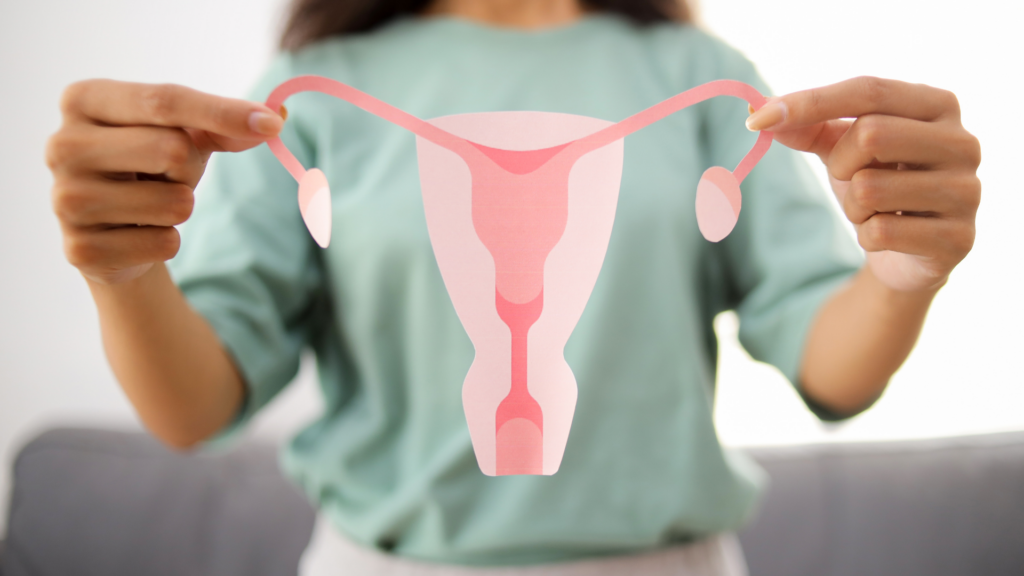
March is the month of endometriosis awareness. This weekend also marks the National Care Day, the perfect moment to shine a light on this condition. One of ten people who menstruate in Belgium are affected by it. Despite increased research in recent years, there is still no medicine that can cure endometriosis.
Endometriosis is a chronic condition in which cells similar to the lining of the uterus grow outside of it, often spreading into the abdominal cavity and causing chronic pain. According to Charlotte Maillard, a gynaecologist specialising in endometriosis and member of the Brussels Centre of Expertise in Endometriosis, research into the condition has grown considerably within the medical sector in recent years. Nevertheless, the path to diagnosis remains painfully slow.
Why is that?
The delayed diagnosis can be attributed to several factors. First, there are different types of endometrioses and the condition is heterogeneous, meaning no two patients present with the same complaints or symptoms. Second, there is no clearly measurable marker in the blood or body that indicates whether someone has endometriosis. “You can’t simply take a blood test and say: you have the condition,” says Dr Maillard. Finally, there is also a significant lack of awareness and knowledge of endometriosis among both doctors and patients.
Breakthroughs in endometriosis research
In recent years, three research directions have emerged that may offer greater clarity on the condition: the saliva test, microbiome research, and immunological research. The saliva test is based on micro-RNA found in saliva, which could potentially serve as a marker for endometriosis. “Theoretically interesting,” says Dr Maillard, “but not yet scientifically proven.” If it were to work, a simple saliva sample could enable diagnosis without invasive procedures. Research also shows that people with endometriosis may have a different microbiome, meaning different bacteria in the vagina and endometrium. This line of research helps to better understand the causes of the condition but does not yet lead to treatment. A third avenue is immunological research, in which Dr Maillard herself is personally involved. The aim: to understand why some people develop endometriosis and others do not. While these research methods offer greater insight, the pill remains the only treatment option for now.
Plenty of research, no cure
“There is no targeted treatment for endometriosis, the pill is the only option,” says Dr Maillard. “The most common approach is to suppress menstruation using hormonal medication,” she adds. In the meantime, people with endometriosis are telling their own stories in This Is Endo, the BAFTA winner for Best Short Film (2026). The documentary can be viewed via this link: https://www.thisisendo.com/

Marwa Ben Ammi
Intern Amazone