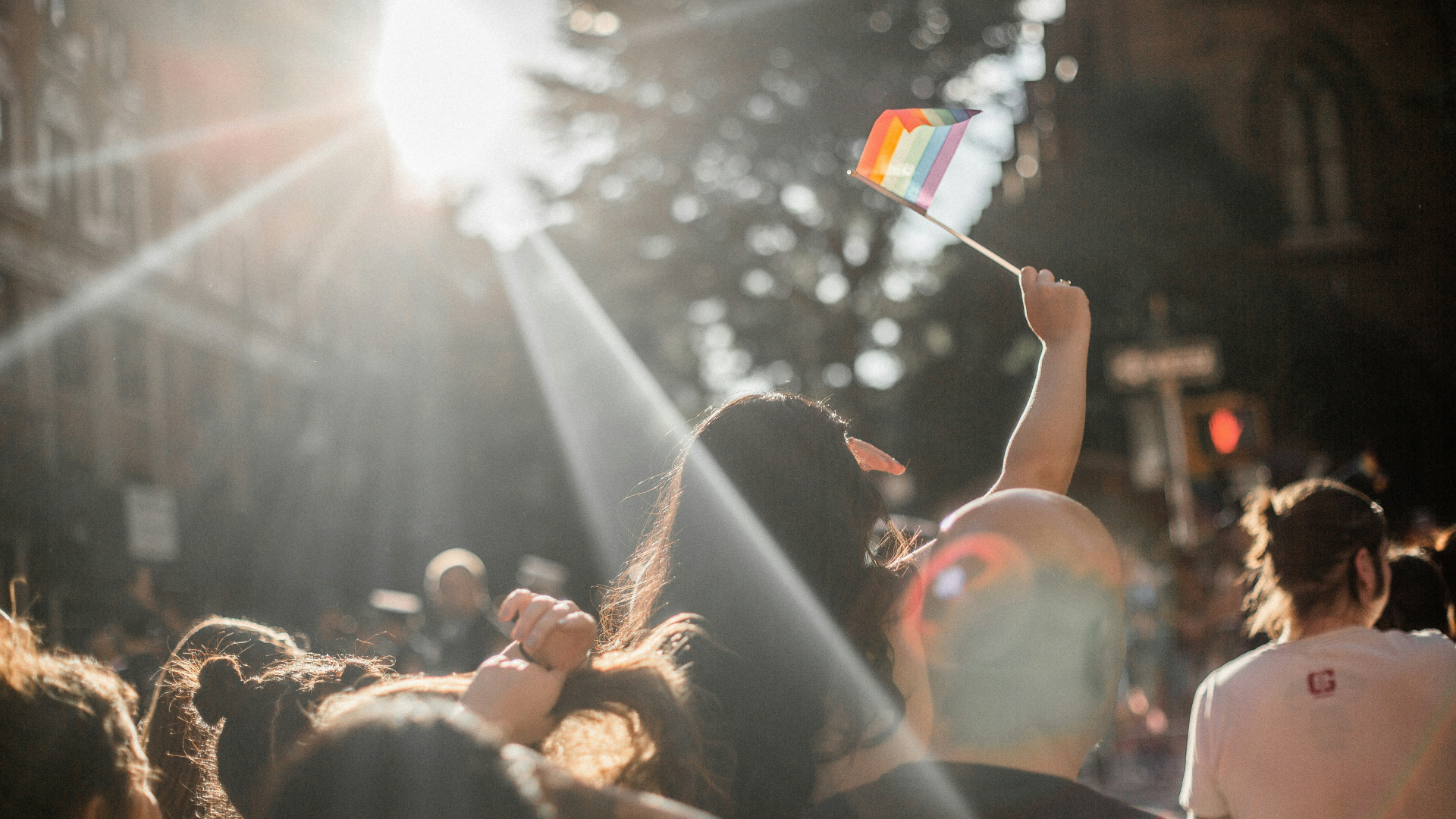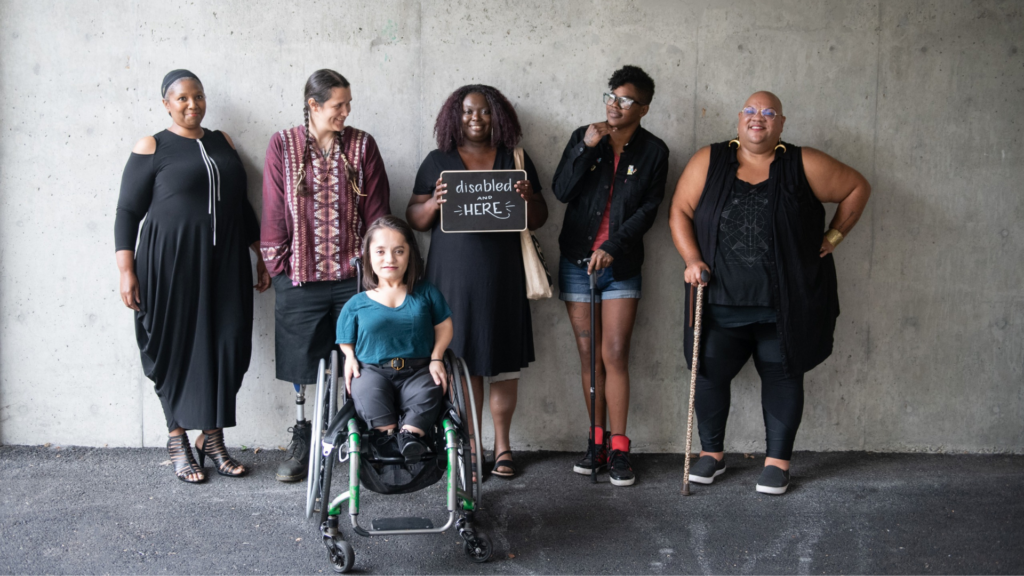
On September 18th and 19th 2026, Amazone is organising its annual festival called The Feminist Days. This year, the festival focusses on the health of women and gender minorities. In light of this event, this article discusses the concept of ableism and the violence that women and gender minorities with a disability face daily. Ableist discrimination is too often rendered invisible, even within feminist movements themselves.
What is ableism?
Ableism, also referred to as capacitism or handicapism, refers to the full range of discrimination and violence experienced by people with disabilities. A disability can be physical, sensory, cognitive, psychological, or linked to a chronic illness, and is therefore not always visible.
Ableist oppression is not limited to individual prejudices but is embedded in a capitalist social system that hierarchises bodies and capacities according to norms of performance and productivity. The ideal of health and the absence of impairment elevate non-disabled people as the reference model, while marginalising those who do not conform to these norms.
People with disabilities are thus confronted with discriminatory stereotypes, but also with institutional violence stemming from an environment designed primarily for non-disabled people. Public policies, particularly in the areas of education, urban planning, and access to services, still insufficiently account for people with disabilities, contributing to situations of exclusion and forms of dependency that further endanger their situation and increase their vulnerability to violence.
The fight against ableism: a brief history
Anti-ableist movements first emerged in the United States, the United Kingdom, and Sweden through Disability Studies in the 1980s. In a context where disability was still largely perceived as an individual problem, this field rejected this individualist outlook in favour of a social and political one, making the personal political. Disability Studies researchers analyse disability as a social construction resulting from a society that is ill-adapted to individuals who do not conform to health norms.
The term ableism then emerged to denounce the systemic nature of the oppression experienced by disabled people. Its French translation validisme appeared in France in 2004 with the manifesto La culture du valide (occidental) by disabled researcher Zig Blanquer.
Women and gender minorities bearing the brunt of ableism
Ableism does not affect all individuals in the same way. It is necessary to adopt an intersectional approach to understand how different systems of domination, such as sexism, racism, classism, and ableism, interact with and mutually reinforce one another. Women and gender minorities with disabilities can find themselves at the intersection of multiple forms of oppression, which increases their exposure to violence and discrimination.
Sexism and ableism are built on similar mechanisms of hierarchising bodies and lives, between those of the dominant and the dominated. Both manifest through inferiorisation and even infantilisation, control over behaviours and bodies, precarisation that reinforces dependency and exclusion from certain social spaces.
In this context, women and gender minorities with disabilities are more exposed to sexist and sexual violence. The latest European survey on violence against women and other forms of interpersonal violence reports that in Belgium, 56.3% of women unable to work due to a disability or a long-term health problem experienced psychological violence, compared to 29.9% of the general female population. Some 41.2% also reported physical violence, compared to 14.4% of all women. Regarding sexual violence committed by a partner, the figure stands at 24.3%, a rate four times higher than that observed among employed women. These figures remain underestimated, however, due to under-reporting of violence and a lack of access to reporting mechanisms.
This overexposure is explained in part by situations of physical, economic, and social dependency that make it more difficult to leave violent situations, but also by persistent institutional barriers, such as inaccessible complaints procedures, a lack of training for care staff, and prevention and awareness tools that are not adapted to different types of disability.
It is therefore more than necessary to consider the diverse realities experienced by women and gender minorities with disabilities, and to guarantee them effective access to financial autonomy and protection from violence.
Your upcoming feminist events
On September 18th and 19th 2026, Amazone is organising its Feminist Days around the theme of gender and health. On the programme: workshops, conferences, and screenings on topics such as fatphobia, mental health, the motherhood of migrant women, and much more.
From November 26th to December 6th 2026, the City of Brussels is organising the Week of Disabilities with a series of accessible activities to meet and exchange on the visibility of people with disabilities.
On November 29th, the Mirabal platform is organising its annual march against violence against women with a fully accessible route, to denounce gender-based violence and reaffirm the need for protective policies for all women.
Resources
Are you in immediate danger? Call the emergency number 112 to contact the local authorities.
Do you want to get away from a violent situation? By calling the free, anonymous number 02/349.44.22, you can request a professional driver 24/7 who will take you to a safe place free of charge. You can find more information here.
Are you a victim of gender-based violence? You can seek help at stop-violence.Brussels, via the General Welfare Centre (CAW) or via the Sexual Assault Centres.
Are you a professional and would you like to know more about gender-based violence in a professional context? Check out the Toolbox at stop-violence.Brussels.

Théa Bacouel
Intern Amazone